System configuration
Dedicated line, additives, pumps, auxiliary water, alarms, monitoring, and other design features.
Fire-line assemblies require careful coordination because water-supply protection, fire-system design, testing, and service continuity intersect.
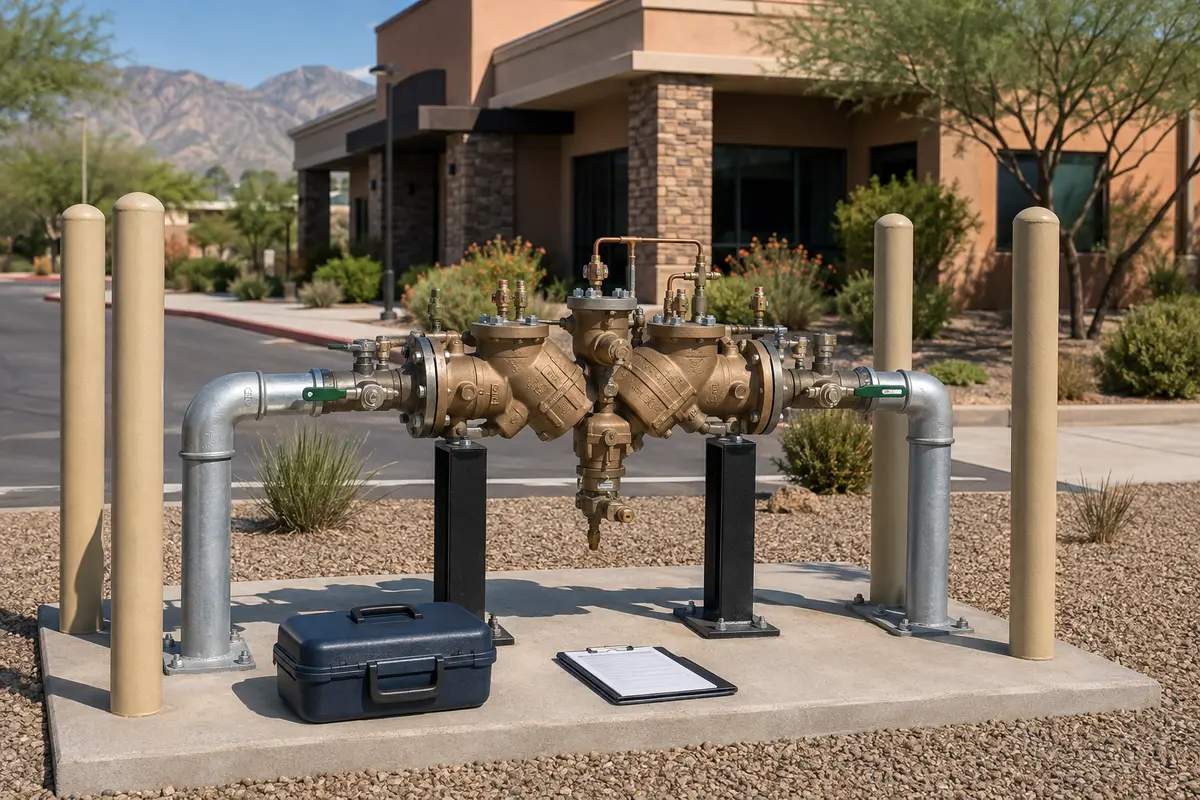
The City of Buckeye says an approved double-check assembly may be used for an engineered fire-line system. That is not a blanket rule for every fire connection: additives, auxiliary sources, or other hazards can require different protection.
Testing or servicing a fire-line assembly should be coordinated with the responsible property contact and appropriately qualified fire-protection professionals so required system safeguards are maintained.
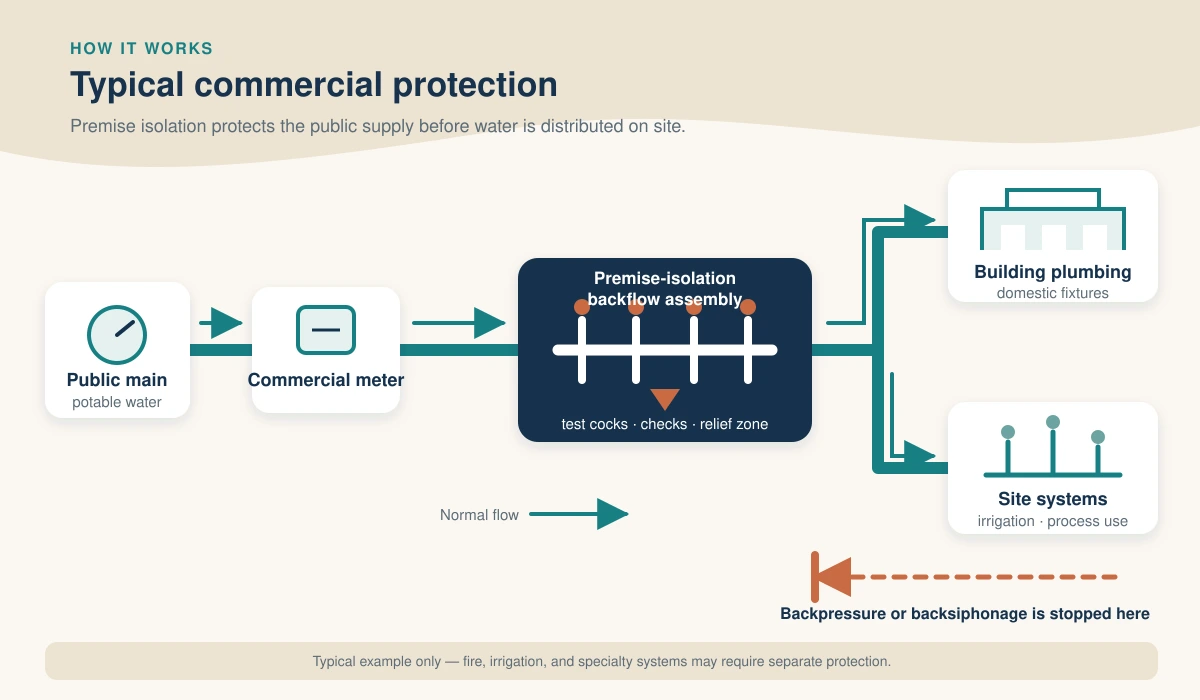
Dedicated line, additives, pumps, auxiliary water, alarms, monitoring, and other design features.
Property management, alarm monitoring, fire-protection contractor, city requirements, and shutdown procedures.
Certified tester, annual backflow result, repair documentation, and any separate fire-system inspection records.
No. Buckeye’s city page describes its use for an engineered fire-line system, but the actual hazard and system design control. Confirm with the city and responsible design professionals.
No. They address different requirements. A property may need both, performed and documented by people holding the applicable qualifications.
Fire-protection service interruptions can create serious safety and notification obligations. Work should be planned with the responsible parties before any shutdown.
Sources: City of Buckeye Environmental Compliance; Buckeye City Code §17-4-3.
Buckeye Backflow is not affiliated with the City of Buckeye and does not currently have a service operator. For official questions about your account, notice, or reporting status, contact the city’s Environmental Compliance program.