Need a backflow test for a commercial property, multifamily community, irrigation system, or another regulated connection in Buckeye? Start with the notice, service address, assembly information, and due date.
Review Buckeye backflow testing requirements
Annual Backflow Testing in Buckeye
Buckeye City Code §17-4-3 requires each required backflow prevention assembly to be tested at least once every calendar year. The city may require testing more frequently when conditions warrant.
The City of Buckeye states that property owners are responsible for arranging and paying for required tests and inspections. Testing must be performed by a certified general backflow tester.
Systems Commonly Tested
- Commercial and industrial assemblies: Protection serving regulated business and facility connections.
- Multifamily assemblies: Devices associated with applicable multifamily service connections.
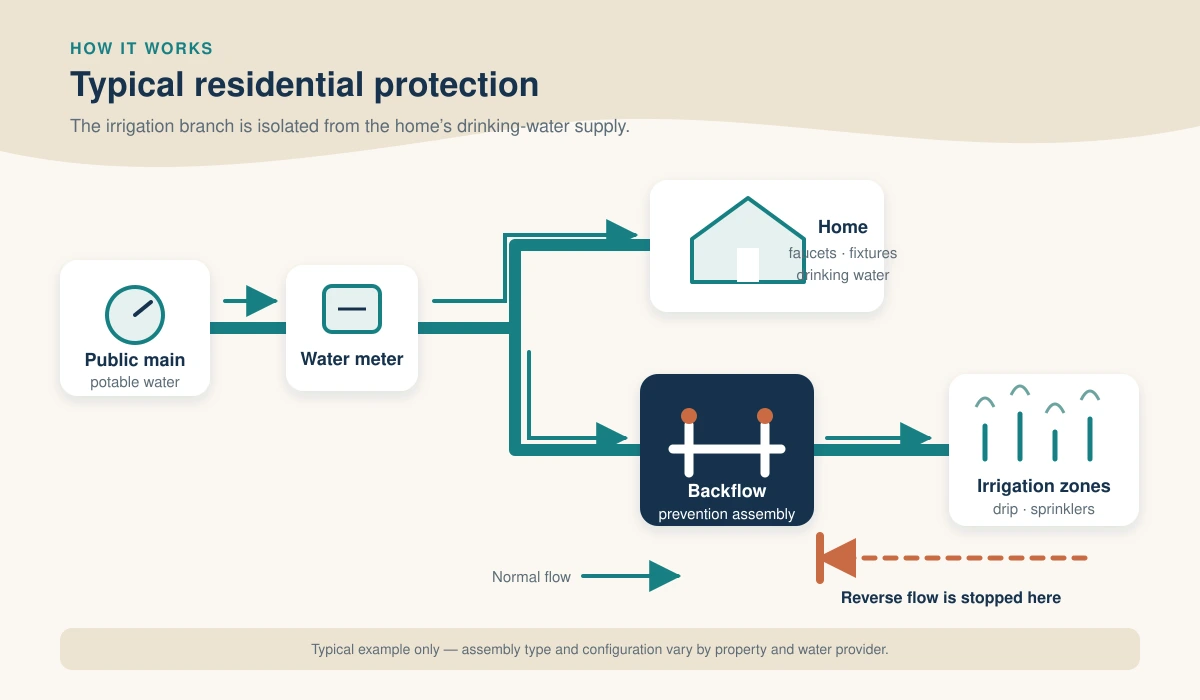
- Dedicated irrigation assemblies: Protection serving landscape-irrigation connections.
- Fire-line assemblies: Devices on applicable engineered fire-line systems.
- Other identified hazards: Connections the city determines require backflow protection.
What a Backflow Test Checks
The exact procedure depends on the assembly type. Testing evaluates whether check valves, relief valves, shutoff valves, and related components respond within the required performance criteria.
A passing result documents that the assembly met the applicable test criteria at that time. A failed result requires correction, retesting, and reporting as required by Buckeye City Code.
Understanding the Testing Process
- Review the notice. Confirm the service address, due date, assembly identifiers, and access instructions.
- Verify the tester. Confirm a current General Backflow Tester certification and current eligibility to submit results through Buckeye’s recognized reporting process.
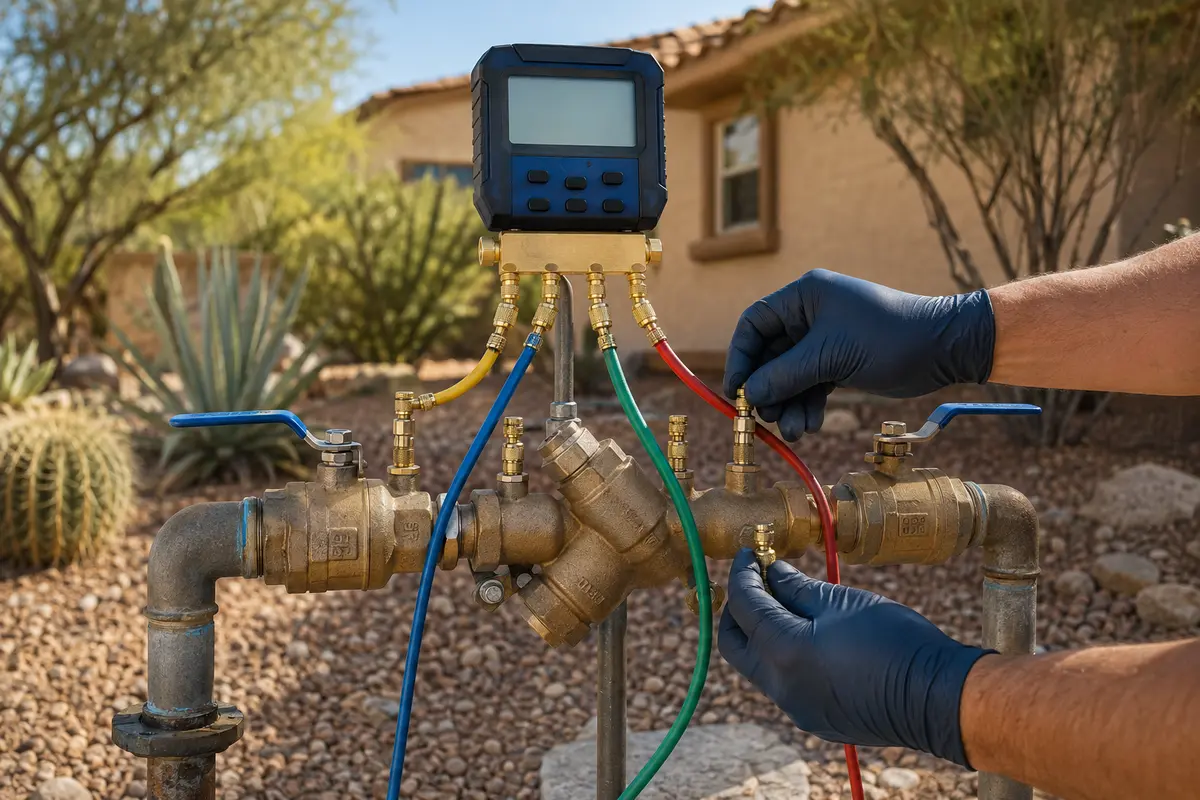
- Perform the field test. The tester connects calibrated equipment and evaluates the assembly.
- Explain the result. Retain a clear pass-or-fail result and any repair recommendation.
- Complete reporting. Confirm how the result is submitted through Buckeye’s recognized process.
What Happens if the Assembly Fails?
A failed result may involve debris, worn internal components, leaking shutoff valves, corrosion, or other conditions. Review backflow repair and failed-test requirements before the deadline.
Testing Questions
How often is testing required?
At least once each calendar year for every required assembly, with more frequent testing possible when the city determines it is warranted.
Who may perform the test?
A current General Backflow Tester whose certification and eligibility to submit results through Buckeye’s recognized reporting process have been confirmed.
Where are results submitted?
Follow the current City of Buckeye Environmental Compliance instructions and retain a copy for the property’s records.
Official sources
- City of Buckeye Environmental Compliance and Backflow Prevention
- Buckeye City Code, Chapter 17, §17-4-3 Backflow Prevention
- Arizona Department of Environmental Quality: Backflow Prevention and Cross-Connection Control
Regulatory information last reviewed October 5, 2026. Requirements and City procedures can change; confirm account-specific instructions directly with the City.