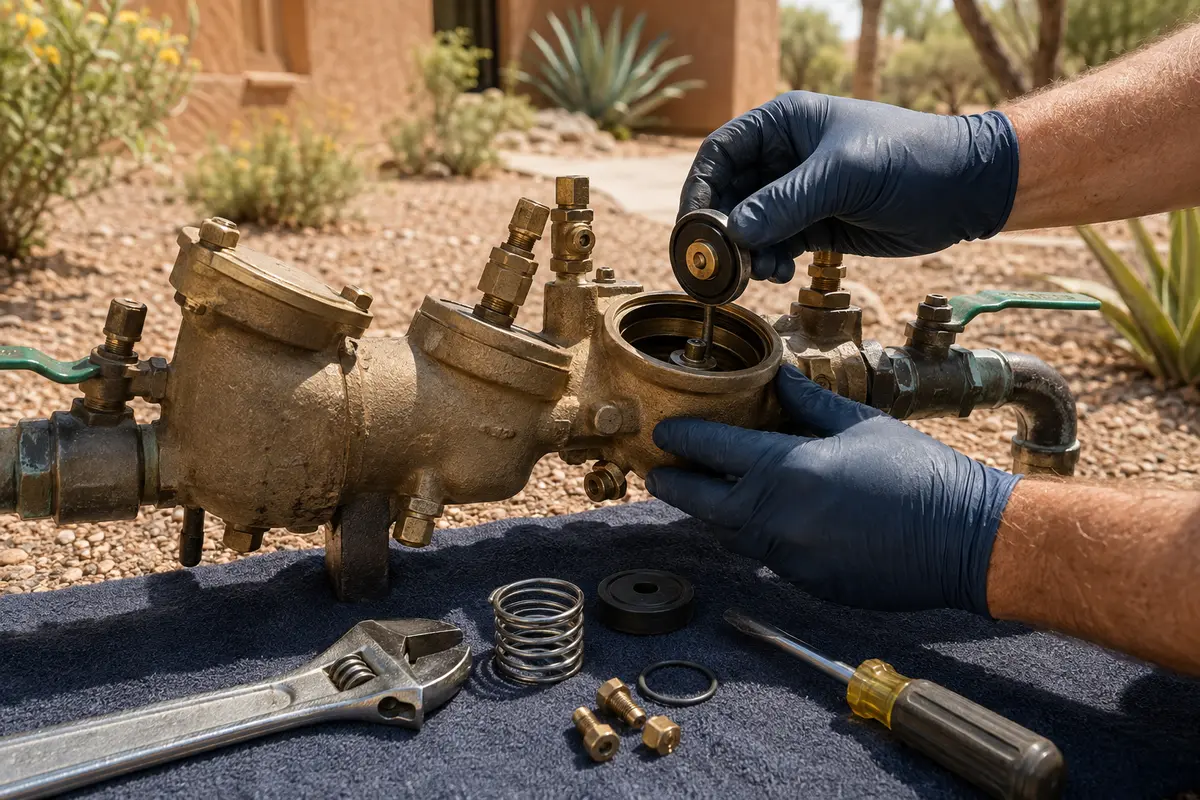
A failed, leaking, or damaged backflow assembly may be repairable. The correct next step depends on the test result, assembly condition, approved configuration, and Buckeye compliance deadline.
Review failed-test requirements
Common Backflow Repair Problems
- Worn or damaged check-valve components
- Relief-valve leakage or failure
- Debris affecting internal movement or sealing
- Leaking shutoff valves, seals, or fittings
- Corrosion, impact, weather, or age-related damage
Repair After a Failed Test
The tester should document what failed and notify the property owner and city as required. For covered consumers other than single-family residential consumers, Buckeye City Code states that necessary repair, overhaul, or replacement must be completed within ten days.
Corrective work does not replace the required retest. Obtain a passing retest and confirm that test and repair results are submitted through the city’s recognized process.
Repair or Replacement?
Repair may be practical when the approved assembly is accessible, serviceable, and supported by available parts. Replacement may be more appropriate when the device is obsolete, badly damaged, incorrectly configured, repeatedly failing, or uneconomical to repair.
Information to Gather
- City notice and due date
- Initial test report and failed readings
- Assembly manufacturer, model, size, and location
- Visible leakage or physical damage
- Access, shutdown, tenant, or operating-hour restrictions
Repair Questions
Does a repaired assembly need to be retested?
Yes. Buckeye’s code requires retesting after the defect is corrected.
Can any plumber perform the regulated test?
Do not rely on a general plumbing credential alone. Testing and retesting must be completed by a current General Backflow Tester; verify current City acceptance and reporting eligibility.
Official sources
- City of Buckeye Environmental Compliance and Backflow Prevention
- Buckeye City Code, Chapter 17, §17-4-3 Backflow Prevention
- Arizona Department of Environmental Quality: Backflow Prevention and Cross-Connection Control
Regulatory information last reviewed October 5, 2026. Requirements and City procedures can change; confirm account-specific instructions directly with the City.