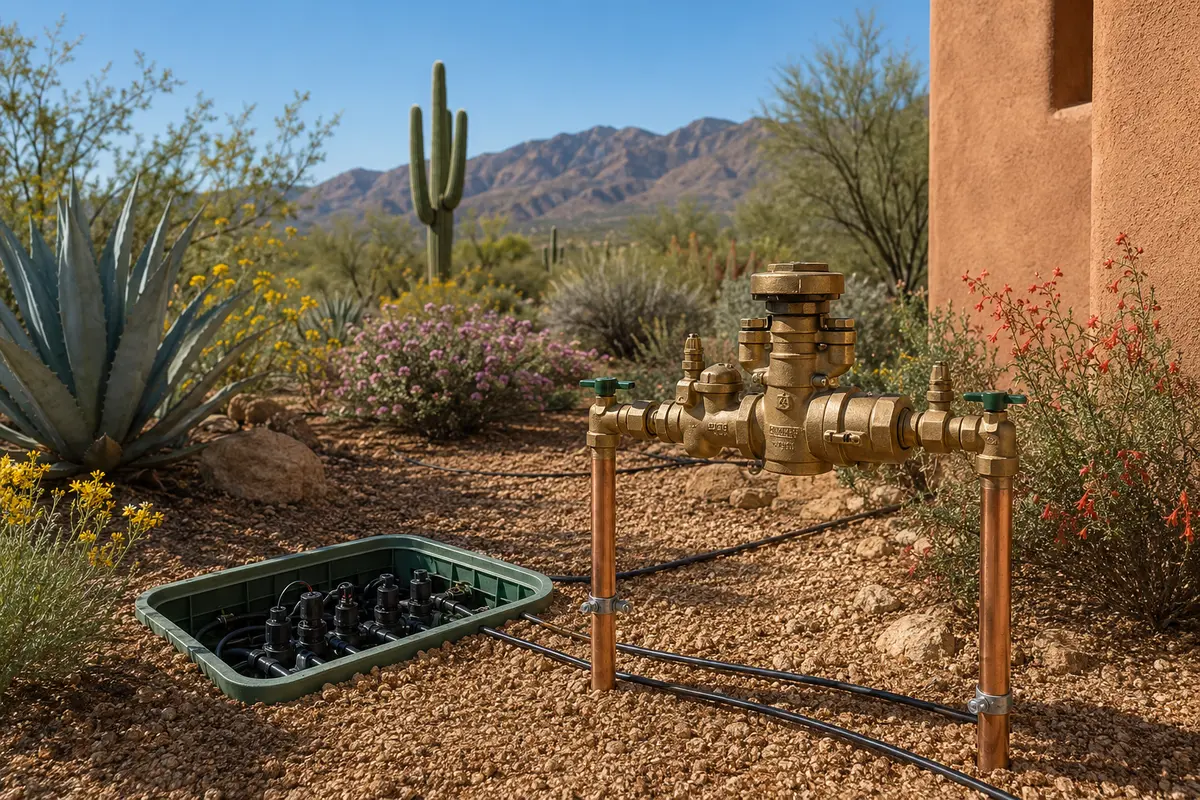
Dedicated landscape-irrigation connections are specifically identified in the City of Buckeye’s backflow requirements. The correct assembly and testing obligation depend on the actual connection and approved design.
Why Irrigation Connections Need Protection
Irrigation systems can contain soil, stagnant water, fertilizers, treatment products, and other substances that should not flow backward into the potable-water system. A correctly selected and maintained assembly helps protect the connection.
Annual Testing
Every required assembly must be tested at least once each calendar year by a certified tester. The city may require more frequent testing when conditions warrant.
Before the Test
- Locate the assembly and clear safe access
- Keep the city notice and due date available
- Identify irrigation schedules and controller restrictions
- Note leaks, damage, corrosion, or prior repairs
- Confirm how the result will be reported
If the Irrigation Assembly Fails
A failed device must be corrected and retested. For covered consumers other than single-family residential consumers, the city code states a ten-day correction period. Follow the account-specific notice and confirm any ambiguity directly with the city.
Irrigation Questions
Does every residential irrigation system require the same device?
No. Requirements depend on the service connection, actual hazard, and approved configuration.
Can testing interrupt irrigation service?
Testing requires operating assembly valves, so coordinate schedules, locked enclosures, and sensitive landscaping in advance.
Official sources
- City of Buckeye Environmental Compliance and Backflow Prevention
- Buckeye City Code, Chapter 17, §17-4-3 Backflow Prevention
- Arizona Department of Environmental Quality: Backflow Prevention and Cross-Connection Control
Regulatory information last reviewed October 5, 2026. Requirements and City procedures can change; confirm account-specific instructions directly with the City.